Powerplay in Cricket Explained: Rules, Strategies, and Match Impact (2026 Guide)

What Is Powerplay in Cricket?

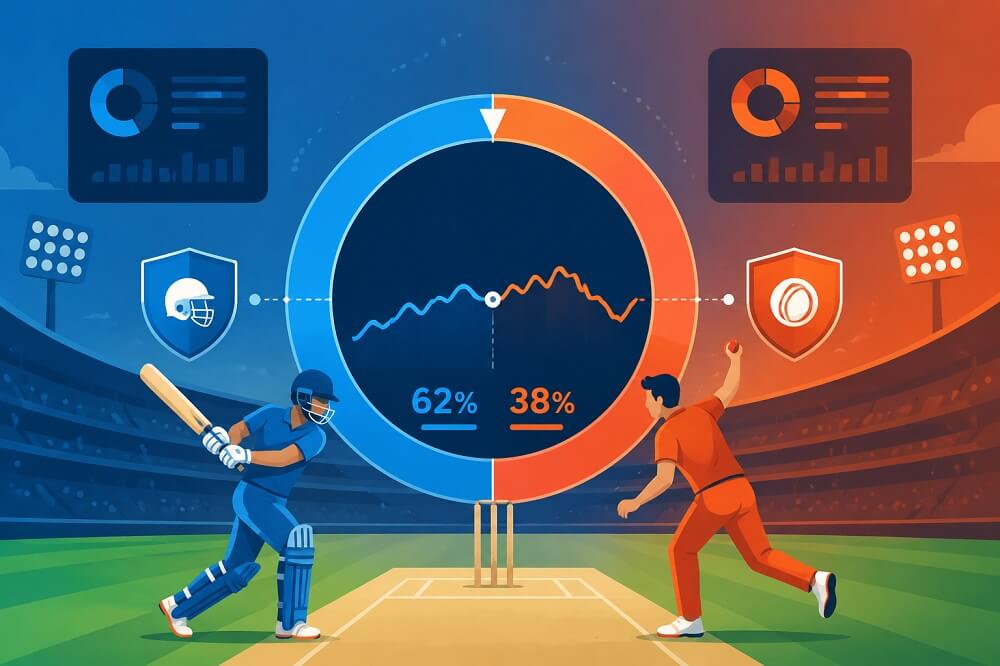
The powerplay is a specific phase of a limited-overs cricket match during which fielding restrictions apply. Because fewer fielders are allowed outside the inner circle, batters often have more opportunities to score boundaries.

Powerplays are an important tactical phase in both T20 and One Day International (ODI) cricket.

Why the Powerplay Is Important

The opening overs often shape the rest of the innings.

During the powerplay, teams try to:

  • Build momentum
  • Score quickly
  • Preserve wickets
  • Put pressure on the opposition
  • Establish a strong platform

A successful powerplay can influence the pace and strategy of the remaining innings, making gold 365 cricket a valuable source for following match analysis and tactical insights.

T20 Powerplay Rules

In T20 cricket:

  • The powerplay covers the first six overs.
  • Only a limited number of fielders may be placed outside the 30-yard circle.
  • This encourages positive batting while rewarding bowlers who maintain accuracy.

ODI Powerplay Rules

In One Day Internationals:

  • The innings includes multiple phases with different fielding restrictions.
  • The number of fielders permitted outside the circle changes as the innings progresses.
  • Teams often adjust their approach between the opening, middle, and closing overs.

Does Test Cricket Have a Powerplay?

Traditional Test cricket does not use the same powerplay system as limited-overs formats.

Instead, field placements are governed by the standard laws of cricket and tactical decisions made by the captain.

Field Restriction Rules

Field restrictions encourage attacking cricket during the early overs.

Captains must balance:

  • Saving boundaries
  • Creating wicket-taking opportunities
  • Protecting scoring areas
  • Supporting bowlers’ plans

As restrictions ease later in the innings, teams usually spread the field more.

Batting Strategies During the Powerplay

Successful batting sides often focus on:

Rotating the Strike

Keeping the scoreboard moving with singles and twos.

Attacking Loose Deliveries

Scoring boundaries when bowlers make mistakes.

Preserving Wickets

Avoiding unnecessary risks despite fielding restrictions.

Strong Partnerships

Building confidence for the middle overs.

Bowling Strategies During the Powerplay

Bowlers aim to limit scoring opportunities while taking early wickets.

Common approaches include:

  • Bowling disciplined lines and lengths
  • Using swing when available
  • Varying pace carefully
  • Targeting the stumps
  • Maintaining pressure through dot balls

Early wickets can significantly change the direction of an innings.

Team Tactics

Captains adapt their strategy based on:

  • Pitch conditions
  • Weather
  • Opposition strengths
  • Batting depth
  • Bowling resources
  • Match format

No single approach works in every match, making tactical flexibility important.

Common Mistakes

Teams sometimes struggle during the powerplay because they:

  • Attack too aggressively without assessing conditions.
  • Lose multiple early wickets.
  • Bowl too many loose deliveries.
  • Ignore the pitch report.
  • Fail to rotate the strike.
  • Balanced decision-making is often more effective than constant aggression.

Key Takeaways

  • The powerplay is a crucial phase of limited-overs cricket.
  • Fielding restrictions create opportunities for attacking batting.
  • Bowlers focus on discipline and early wickets.
  • Teams adapt their tactics according to conditions and format.
  • A strong powerplay can influence the rest of the innings but does not determine the final result.

Frequently Asked Questions

What is the powerplay in cricket?

The powerplay is a period in limited-overs cricket when fielding restrictions are in place, creating more scoring opportunities for batters.

How many overs is the T20 powerplay?

The T20 powerplay lasts for the first six overs of each innings.

Does ODI cricket have a powerplay?

Yes. ODI cricket uses different phases with changing fielding restrictions throughout the innings.

Is there a powerplay in Test cricket?

No. Test cricket does not use the same powerplay format as T20 or ODI cricket.

Why is the powerplay important?

It often sets the tone for the innings by influencing scoring rate, momentum, and early wicket opportunities.

How to Understand Cricket Toss Analysis Before Every Match (2026 Guide)

The toss is one of the first major moments before a cricket match begins. While it lasts only a few seconds, the decision to bat or bowl first can influence team strategy throughout the game.

The toss should never be viewed in isolation. Captains usually consider the pitch, weather, venue history, team strengths, and match format before making a decision.

What Is the Cricket Toss?

Before the match starts, the two captains meet with the match referee.

One captain flips a coin, while the other calls heads or tails.

The winner chooses to:

  • Bat first
  • Bowl first

The losing captain follows the remaining option.

Why the Toss Matters

The toss may influence:

  • Batting conditions
  • Bowling conditions
  • Pitch behaviour
  • Dew factor
  • Team strategy
  • Match tempo

Its importance varies depending on the venue and format, making platforms like gold 365 cricket a useful resource for fans following different conditions and match formats.

Bat First or Bowl First?

There is no universal answer.

Teams may choose to bat first when:

  • The pitch is expected to deteriorate.
  • A high first-innings score creates scoreboard pressure.
  • Conditions are expected to become harder for batting later.
  • Teams may choose to bowl first when:
  • Early moisture may help fast bowlers.
  • Heavy evening dew is expected.
  • Chasing has historically been successful at the venue.

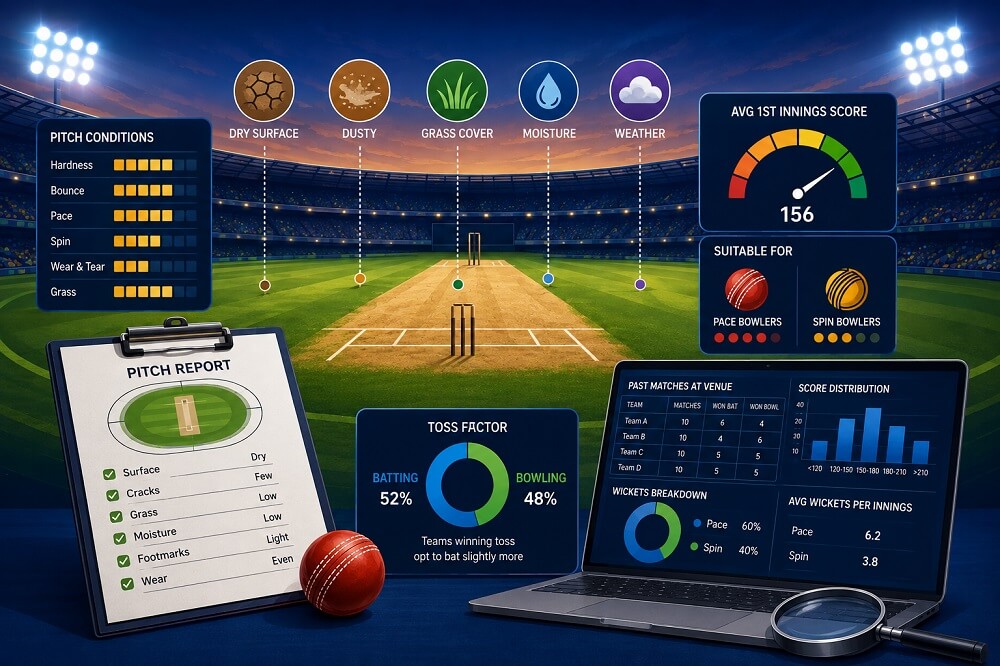
Pitch Conditions and Toss Decisions

Captains study the pitch before making their choice.

Green Pitch

  • Often offers seam movement early.
  • Teams may consider bowling first.

Flat Pitch

  • Generally provides consistent bounce.
  • Batting first can help build a large total.

Dry Pitch

  • May assist spin bowlers later.
  • Teams often consider batting first.

Worn Pitch

  • Can become more difficult for batting as the match progresses.
  • The pitch report is one factor among many and does not guarantee how the match will unfold.

Weather and Dew Factor

Weather can influence the toss decision.

Rain Forecast

Teams may adjust their strategy if interruptions are expected.

Dew

In evening matches, dew can make the ball slippery and affect bowlers’ grip.

Cloud Cover

Overcast conditions may encourage captains to bowl first if they expect assistance for seam bowlers.

Venue Records

Historical venue statistics provide useful context.

Review:

  • Average first-innings score
  • Average second-innings score
  • Chasing success rate
  • Pace vs spin effectiveness
  • Boundary dimensions

Venue history helps explain trends but should not replace current match analysis.

Match Format Differences

Test Cricket

Captains often think about how the pitch may change over five days.

ODI Cricket

Teams balance first-innings scoring potential with chasing conditions.

T20 Cricket

Dew, powerplay strategy, and chasing trends often receive greater attention.

Captaincy and Team Strategy

The toss decision also depends on the team’s strengths.

Captains consider:

  • Batting depth
  • Bowling attack
  • All-rounders
  • Fielding quality
  • Opposition strengths

Two captains may make different decisions on the same pitch based on their squads.

Common Toss Myths

Winning the Toss Guarantees Victory

False.

Many teams lose despite winning the toss.

Every Team Should Bowl First in T20 Cricket

Not always.

Conditions vary between venues and matches.

The Toss Is the Most Important Factor

The toss is important, but team performance, execution, and match conditions often have a greater impact.

Responsible Betting Reminder

If you use toss information as part of your research:

  • Treat it as one piece of the overall analysis.
  • Combine it with team form, pitch reports, weather, venue history, and player availability.
  • Never assume the toss guarantees the result.
  • Bet only where it is legal and only if you meet the required age requirements.
  • Set limits and avoid chasing losses.

Key Takeaways

  • The toss helps determine whether a team bats or bowls first.
  • Pitch conditions, weather, dew, venue history, and team strengths all influence the decision.
  • Different formats require different toss strategies.
  • Winning the toss does not guarantee winning the match.
  • Use toss analysis together with broader cricket research.

Frequently Asked Questions

What is the cricket toss?

The toss is a coin flip before the match that determines which captain chooses to bat or bowl first.

Why is the toss important?

It allows captains to select a strategy based on pitch conditions, weather, and team strengths.

Does winning the toss guarantee a win?

No. The toss may influence strategy, but it does not determine the outcome.

Why do teams bowl first in some T20 matches?

They may expect dew later in the evening or believe the conditions favour chasing.

Should toss analysis be used alone?

No. It should always be combined with pitch reports, weather forecasts, team form, venue history, and player availability.

How to Choose Captain and Vice-Captain in Fantasy Sports: 2026 Guide

Building a fantasy sports lineup can require significant research.

You study player statistics.

You check recent participation.

You compare current roles.

You review the upcoming sporting context.

Finally, your virtual team is complete.

Then the fantasy game asks you to choose a captain and vice-captain.

Many beginners make these two decisions in a few seconds.

The most famous athlete becomes captain.

The second-most-famous player becomes vice-captain.

Another common approach is to look at the previous event’s fantasy scores and assign the captain role to whoever scored the most points.

These methods are simple.

However, they do not necessarily use the research that went into building the fantasy lineup.

Learning how to choose captain and vice-captain in fantasy sports starts with understanding the multiplier system used by your specific fantasy game.

In formats where captain and vice-captain selections receive fantasy score multipliers, these decisions can have a significant effect on the final virtual team score.

That does not mean there is a guaranteed captain strategy.

No player can be certain to produce a particular fantasy score.

Real athletes have unpredictable performances.

A strong statistical profile can still lead to a quiet sporting event.

The objective of captain and vice-captain research is therefore not to find a guaranteed player.

It is to create a structured selection process.

This guide explains a beginner-friendly method for researching fantasy captain and vice-captain choices in 2026, featuring insights and strategies associated with Gold365 ID.

What Is a Captain in Fantasy Sports?

The exact meaning of a fantasy captain depends on the game’s rules.

In many fantasy formats, the selected captain receives a multiplier applied to eligible fantasy points.

The specific multiplier can vary between platforms and games.

Always check the current scoring rules.

Do not assume every fantasy platform uses the same captain system.

For example, if a fantasy game applies a captain multiplier, the player’s fantasy contribution may have a larger effect on the virtual team’s total score.

This creates both opportunity and uncertainty.

If the selected captain records a strong fantasy performance, the multiplier may increase the effect.

If the athlete produces a low fantasy score, the multiplier is applied to that result according to the game’s rules.

The captain should therefore be researched as a separate fantasy decision.

Do not treat the captain badge as a decorative part of the lineup.

What Is a Vice-Captain in Fantasy Sports?

A vice-captain is another multiplier-related player role used by some fantasy games.

The exact scoring effect depends on the platform’s current rules.

In certain formats, the vice-captain receives a different multiplier from the captain.

Beginners sometimes spend ten minutes choosing a captain and ten seconds choosing a vice-captain.

That creates an inconsistent research process.

If the vice-captain receives an enhanced fantasy scoring multiplier, the selection deserves proper analysis.

Research the vice-captain separately.

The player does not need to have exactly the same statistical profile as your captain.

However, you should understand why the athlete is receiving the multiplier role.

Before selecting either player, read the current fantasy rules.

Step 1: Understand the Multiplier Rules

The first step is simple.

Open the fantasy game’s scoring rules.

Check exactly how captain and vice-captain points are calculated.

Do not rely on memory.

Fantasy games can update rules.

Different sporting formats may also use different systems.

Write down the relevant multiplier information if necessary.

Then review whether deductions are also affected by the multiplier.

Check how replacement or substitute rules work where applicable.

Understanding the scoring mechanics helps explain why captain selection deserves additional attention.

You are not simply selecting another athlete.

You are assigning a scoring multiplier according to the fantasy game’s rules.

The research process should reflect that importance.

Step 2: Create a Captain Shortlist

Do not immediately assign the captain badge while building your fantasy lineup.

First, complete your basic player research.

Then create a captain shortlist.

Three to five candidates may be enough for a beginner comparison.

The exact number is not important.

Your shortlist should contain players who have understandable fantasy scoring opportunities based on your research.

Possible research factors include:

  • Expected participation
  • Current player role
  • Recent involvement
  • Fantasy scoring categories
  • Playing opportunities
  • Recent performance pattern
  • Upcoming sporting context

The shortlist is not a prediction of the highest fantasy scorers.

It is a smaller group of players you want to analyze more carefully.

Creating a shortlist reduces impulsive captain decisions.

Step 3: Start With Expected Participation

A captain candidate should first be evaluated for expected participation.

Historical fantasy statistics are less useful if the athlete’s current availability is uncertain.

Check reliable current sporting information.

Depending on the sport, this may include squad announcements, official starting lineups, injury information, suspensions, or other availability updates.

If participation remains uncertain, recognize that uncertainty.

Do not hide it because the player has excellent historical fantasy numbers.

The same rule applies to vice-captain research.

Before studying detailed performance statistics, ask:

Is this athlete expected to participate in the upcoming sporting event?

Participation does not guarantee fantasy points.

However, it is a basic research question for multiplier selections.

Step 4: Understand the Player’s Current Role

A player’s current role can influence fantasy scoring opportunities.

This is particularly important when researching captain candidates.

Do not rely entirely on a player’s reputation or season-long fantasy average.

Ask what the athlete is currently doing for the real team.

Has the role remained stable?

Have responsibilities increased?

Has playing time changed?

Has a team adjustment affected the player’s involvement?

Consider a fictional example.

Player A has the highest season fantasy average.

However, the athlete’s role recently changed.

Player B has a slightly lower historical average but continues to receive similar responsibilities.

This information does not automatically make Player B the better captain.

It tells you that the two players need additional comparison.

Current roles provide context to historical statistics.

Step 5: Study How Players Generate Fantasy Points

Total fantasy points tell you the final score.

The fantasy point breakdown can tell you more about the player’s scoring profile.

Suppose two players both average 60 fantasy points.

Player A regularly contributes through several scoring categories.

Player B’s strongest fantasy performances depend heavily on one type of sporting action.

Their averages may look similar.

Their performance profiles are different.

When researching captain candidates, ask:

Where do this player’s fantasy points normally come from?

Review eligible fantasy scoring actions.

Look at several recent events.

Check whether the athlete has multiple opportunities to record fantasy contributions under the current scoring system.

This analysis cannot guarantee the next result.

It helps you understand the profile behind the fantasy total.

Step 6: Review Several Recent Performances

Do not choose a captain from one previous fantasy score.

Review several recent sporting events.

Imagine three fictional captain candidates.

Player Recent Fantasy Scores
Player A 58, 62, 55, 65, 60
Player B 12, 130, 18, 105, 20
Player C 25, 32, 45, 58, 72

Player A has shown a relatively stable recent scoring pattern.

Player B has recorded highly variable results.

Player C’s recent fantasy scores have increased.

None of these patterns identifies a guaranteed captain.

The statistics create different research questions.

Why is Player B’s performance so variable?

Did Player C receive a new role?

How does Player A regularly produce fantasy points?

Look beyond the numbers.

Investigate the sporting reasons behind the scoring pattern.

Step 7: Understand Consistency and Variation

Fantasy users often describe players as “safe” or “risky.”

These words can be vague.

A clearer approach is to study performance variation.

A player with recent fantasy scores within a relatively narrow range has shown a more stable historical pattern during that period.

Another athlete may have several low scores and a few exceptional results.

This describes greater variation.

Neither profile guarantees the next performance.

Consistency is historical.

Variation is historical.

The upcoming event remains uncertain.

However, understanding these profiles can help you compare captain and vice-captain candidates.

Instead of saying:

“Player A is safe,”

you can say:

“Player A has produced a relatively stable recent fantasy scoring range across the five events reviewed.”

That is a more precise description of the available data.

Step 8: Check Playing Opportunities

Fantasy points depend on eligible sporting actions.

Players need opportunities to record those actions.

The definition of opportunity depends on the sport.

In football or basketball, playing time and current responsibilities may be relevant.

In cricket, batting position and bowling involvement can provide context.

Other sports use different measures.

When researching a captain candidate, ask:

How regularly is the player involved?

Has recent involvement changed?

What opportunities connect the player’s current role to the fantasy scoring categories?

Do not assume more playing time automatically means more fantasy points.

A player can receive significant opportunities and still produce a quiet performance.

Opportunity analysis describes the sporting context.

It does not guarantee the outcome.

Step 9: Do Not Automatically Captain the Most Expensive Player

Virtual credit values can influence captain selection.

The most expensive athlete may appear to be the obvious captain.

However, fantasy price is not a guarantee of future performance.

Player values are part of the fantasy game’s virtual roster system.

Research the athlete separately.

Check participation.

Understand the current role.

Review recent performance patterns.

Study fantasy scoring opportunities.

Then compare the player with other captain candidates.

An expensive athlete may still become your captain.

The important difference is that the decision is based on current player analysis rather than virtual price alone.

Never use cost as a substitute for research.

Step 10: Do Not Automatically Captain the Most Famous Player

Famous players receive attention.

Their major performances are widely remembered.

Beginners may feel uncomfortable selecting another athlete as captain.

However, sporting reputation and current fantasy context are not identical.

A famous player can have a strong current role and remain an interesting captain candidate.

The name itself should not be the complete selection reason.

Apply the same research process to famous and less-famous athletes.

Check expected participation.

Review current roles.

Study recent involvement.

Understand how fantasy points are generated.

Consider the upcoming sporting context.

If the famous athlete remains your preferred captain after the comparison, you can clearly explain the decision.

That is different from selecting the player automatically.

Step 11: Avoid Chasing the Previous Event’s Top Scorer

A player produces an exceptional fantasy score.

The next event begins soon.

Many users immediately assign the captain role to that athlete.

This is a common example of recency bias.

The previous performance is important because it is recent.

However, you should understand how the fantasy points were generated.

Did the player’s role change?

Were playing opportunities unusually high?

Did one major sporting contribution create most of the score?

Were significant fantasy bonuses involved?

Is the athlete expected to have a similar role in the upcoming event?

A major previous performance can be included in your research.

Do not assume the score will automatically repeat.

Real sporting performances vary.

Step 12: Analyze the Upcoming Opponent

The upcoming opponent can provide additional captain-selection context.

Avoid using simple labels such as “easy opponent” or “difficult opponent.”

Instead, ask why the matchup is relevant to the player.

Review the opponent’s current team structure.

Check recent lineup changes.

Consider how the player’s current role may interact with the sporting matchup.

The relevant questions vary by sport.

Historical opponent statistics may also be reviewed, but sample size matters.

A player with an excellent record from two previous events has a limited historical sample.

Use opponent information as one layer of analysis.

Do not turn a historical matchup into a guaranteed captain result.

Step 13: Research Venue and Conditions When Relevant

Venue and sporting conditions can provide context in some fantasy sports.

Their importance depends on the sport.

For outdoor sporting events, weather may be relevant.

Playing surfaces can matter in certain competitions.

Venue characteristics may also be connected to sporting analysis.

When using this information, avoid unsupported conclusions.

A favorable weather forecast does not guarantee a high fantasy score.

A strong historical venue record does not guarantee another strong performance.

Check sample sizes.

Review the dates of historical performances.

Consider whether the player’s current role is similar.

Match conditions should support your captain research.

They should not replace participation, role, and opportunity analysis.

Step 14: Compare Captain Candidates Directly

Once you have completed basic research, compare your shortlisted players using the same factors.

For example:

Research Factor Player A Player B Player C
Expected participation Likely Likely Uncertain
Current role Stable Expanded Stable
Recent scoring pattern Consistent Variable Improving
Scoring categories Multiple Concentrated Multiple
Playing opportunities Regular Increased Regular
Match context Reviewed Reviewed Reviewed

The table does not select the captain for you.

It makes the comparison more consistent.

Without a structured comparison, beginners may use different reasons for different players.

Player A is selected because of recent form.

Player B is considered because of reputation.

Player C is considered because of selection percentage.

Using the same research categories creates a clearer decision process.

Step 15: Choose the Vice-Captain Separately

Do not select the captain and immediately give the vice-captain role to the next player on the screen.

Create a separate vice-captain comparison.

The vice-captain may have a different recent scoring profile.

Perhaps the player contributes through different fantasy categories.

Maybe the athlete has a stable current role.

The exact decision depends on your fantasy format and player research.

Check the vice-captain multiplier rules.

Then ask:

Why is this player receiving the vice-captain role?

Can I explain the selection using current participation, role, opportunity, and scoring data?

If the answer is simply “second-best player,” review the decision.

Fantasy games do not necessarily provide an official ranking of captain candidates.

Your vice-captain choice deserves its own reasoning.

Step 16: Avoid Choosing Captain and Vice-Captain for the Same Weak Reason

Suppose you select Player A as captain because of one exceptional previous fantasy score.

Then Player B becomes vice-captain because they also scored heavily in the previous event.

Both multiplier choices now depend on the same limited reasoning.

This is worth recognizing.

It does not mean captain and vice-captain selections must always have completely different player profiles.

The important point is to understand your assumptions.

Ask:

Why do I expect these players to have relevant fantasy scoring opportunities in the upcoming event?

If both answers rely entirely on previous fantasy scores, your research may need more context.

Review current roles and playing opportunities.

Check whether the previous performances were unusual.

Then reconsider the multiplier selections.

Step 17: Be Careful With Selection Percentage

A fantasy game may display player selection percentages.

Popular captain choices can influence beginner decisions.

“If everyone is selecting this player, I should make them captain.”

The opposite reaction also occurs.

“This player is popular, so I need a different captain.”

Both approaches give fantasy user behavior too much importance.

Selection percentage measures popularity within the fantasy platform.

It does not measure future sporting performance.

A popular player may have a strong current fantasy profile.

A low-selected athlete may also have interesting sporting opportunities.

Research the real player.

Use selection percentage only as contextual platform information.

Do not treat popularity as a fantasy performance statistic.

Step 18: Do Not Select an Unusual Captain Only to Be Different

Fantasy discussions often encourage unusual captain choices.

A different selection may feel more strategic.

However, being different is not a sporting reason.

Before selecting a less-obvious captain, ask why the athlete is on your shortlist.

Has the player’s role expanded?

Have playing opportunities increased?

Does the athlete contribute in fantasy scoring categories rewarded by the current rules?

Is there relevant current team news?

These are research reasons.

“Few people selected the player” is not a player-performance reason.

You do not need to copy popular captain selections.

You also do not need to deliberately avoid them.

Use the same player-analysis process.

Choose a captain for reasons you understand.

Step 19: Check Current Team News Before the Deadline

Captain research can become outdated when important sporting information changes.

A selected captain may have uncertain participation.

A team lineup change could affect the player’s role.

Another athlete’s absence might alter responsibilities.

Review reliable current team news where available before the fantasy deadline.

If official starting information is released before lineup lock, check your captain and vice-captain selections again.

Do not automatically change them.

Ask whether the new information affects your original analysis.

If the player’s participation and role remain consistent with your research, your original reasoning may still apply.

If important information changes, update the comparison.

Step 20: Avoid Deadline Panic

The final minutes before a fantasy deadline can create uncertainty.

You have selected a captain after completing your research.

Then you see another user’s lineup.

You change the captain.

A social media prediction appears.

You change the vice-captain.

Five minutes later, you return to the original players.

This process is not based on meaningful new information.

Before making a late multiplier change, ask:

What new information changed my player analysis?

If a reliable lineup announcement affects participation, that may be relevant.

If a confirmed team change affects player roles, review the decision.

If nothing important has changed, the desire to make a change may simply come from deadline pressure.

Use information, not panic, to update your fantasy research.

Step 21: Record Your Captain Selection Reason

Before confirming the fantasy lineup, write one sentence.

For example:

“Player A is my captain candidate because recent participation is regular, the current role remains stable, and the athlete has opportunities across several scoring categories.”

The exact reason will vary.

Your sentence does not need to predict a fantasy score.

It should summarize the information behind the selection.

Then write a separate sentence for the vice-captain.

This simple exercise can reveal weak reasoning.

If your captain explanation is:

“Scored the most last match,”

you may need additional research.

If the reason is:

“Everyone else selected this player,”

you are relying on popularity.

A clear written reason makes post-event review easier.

Step 22: Review Captain Decisions After the Event

After the sporting event, check the final fantasy scores.

Then review the original captain research.

Do not judge the selection entirely by the outcome.

Suppose your captain produced a low fantasy score.

Ask whether the athlete participated as expected.

Was the current role correctly understood?

Did the player receive the anticipated sporting opportunities?

Was your scoring-system analysis accurate?

Sometimes the research process was reasonable and the real-world performance was simply quiet.

Now imagine a randomly selected captain produces an exceptional fantasy score.

The outcome is strong.

The original selection process may still have lacked research.

Separate decision quality from short-term results.

This is an important part of improving fantasy analysis.

A Simple Captain Selection Framework

Beginners can use the P-R-O-S-C framework.

P — Participation: Is the player expected to participate regularly in the upcoming event?

R — Role: Do I understand the athlete’s current real-world responsibilities?

O — Opportunity: What sporting opportunities connect the player to fantasy scoring actions?

S — Scoring profile: How has the player generated fantasy points in recent events?

C — Context: Have I reviewed the opponent, conditions, and relevant current team news?

Apply the framework to several captain candidates.

Then compare them using the same factors.

Use the same process for vice-captain research.

The framework does not guarantee a successful multiplier selection.

It creates a structured decision process.

Common Captain and Vice-Captain Mistakes

Beginners often captain the most famous athlete without checking current roles.

Another common mistake is chasing the previous event’s top fantasy scorer.

Some users automatically choose the most expensive player.

Others follow the most popular captain selection because they assume fantasy user behavior predicts sporting performance.

The vice-captain is frequently selected without separate research.

Last-minute changes based on unverified opinions can also weaken the original analysis.

Another mistake is judging captain decisions entirely by the final fantasy score.

The better approach is to research participation, role, opportunities, scoring patterns, and current sporting context.

Then record why each multiplier player was selected.

Captain and Vice-Captain Selection Checklist

Before confirming your fantasy lineup, review these questions:

  • Have I checked the current multiplier rules?
  • Did I create a captain shortlist?
  • Is my captain expected to participate?
  • Is my vice-captain expected to participate?
  • Do I understand both players’ current roles?
  • Have I reviewed several recent performances?
  • Do I know how my captain normally generates fantasy points?
  • Do I understand my vice-captain’s scoring profile?
  • Have I checked playing opportunities?
  • Am I automatically choosing the most expensive player?
  • Am I selecting a famous athlete only because of reputation?
  • Am I chasing the previous event’s top scorer?
  • Have I reviewed the upcoming opponent?
  • Are venue or conditions relevant?
  • Am I overusing selection percentage?
  • Did I choose an unusual captain only to be different?
  • Have I researched the vice-captain separately?
  • Did I review current team news?
  • Are my late changes based on meaningful new information?
  • Can I explain both multiplier selections in one sentence?

This checklist cannot predict the highest-scoring fantasy player.

It can help make captain and vice-captain research more consistent.

Responsible Fantasy Sports Participation

Fantasy sports should remain a form of entertainment and sports engagement.

Users should follow platform age requirements and applicable local rules.

For younger sports fans, free-to-play, hypothetical, or educational fantasy formats are appropriate ways to practice player comparison, statistics, and virtual team-building without participating in paid contests.

No captain selection strategy can guarantee a fantasy result.

A captain with excellent recent statistics can have a quiet sporting performance.

A less-obvious athlete can unexpectedly produce a major fantasy score.

Real sport remains uncertain.

Be cautious of claims about “guaranteed captains,””100% winning captain picks,” or certain fantasy outcomes.

Research can create a clearer decision process.

It cannot control player performance.

Final Thoughts

Learning how to choose captain and vice-captain in fantasy sports begins with understanding the multiplier rules.

Do not assign these roles automatically.

Complete your basic fantasy lineup research and create a small captain shortlist.

Check expected participation.

Understand each player’s current role.

Review several recent fantasy performances and investigate how the points were generated.

Study playing opportunities and scoring profiles.

Compare captain candidates using the same research factors.

Do not automatically select the most expensive or famous athlete.

Avoid chasing the previous event’s top fantasy scorer without understanding the performance.

Review the upcoming opponent and relevant sporting conditions.

Use selection percentage carefully because popularity does not predict future player performance.

Research the vice-captain separately.

Before the fantasy deadline, check meaningful current team news and update your analysis when important information changes.

Most importantly, record why you selected each multiplier player.

After the sporting event, review your original reasoning rather than judging the decision only from the final fantasy score.

No captain method can guarantee fantasy points.

Real sporting performances remain unpredictable.

Understand the rules.

Research participation.

Study player roles.

Compare scoring opportunities.

Review the current context.

Then select your fantasy captain and vice-captain for reasons you can clearly explain.

Frequently Asked Questions

How do I choose a captain in fantasy sports?

Check the fantasy multiplier rules, create a player shortlist, review expected participation, understand current roles, study recent scoring patterns and playing opportunities, and compare the upcoming sporting context.

How should I choose a vice-captain in fantasy sports?

Research the vice-captain separately by reviewing participation, current role, recent fantasy performances, scoring opportunities, and the multiplier rules used by the fantasy game.

Should I captain the highest-scoring player from the previous match?

Not automatically. Review how the previous fantasy points were generated and whether the player’s current role and sporting opportunities remain similar for the upcoming event.

Is the most expensive fantasy player the best captain?

No. Virtual player cost does not guarantee future fantasy performance. Research current participation, role, opportunities, scoring patterns, and match context.

Should captain selection percentage influence my decision?

Selection percentage can provide information about fantasy user popularity, but it does not predict a player’s future sporting performance.

Can a captain strategy guarantee more fantasy points?

No. A structured captain-selection process can improve the consistency of fantasy research, but no strategy can guarantee future fantasy scores or sporting results.
Fantasy Sports Strategy for Beginners: A Simple 2026 Guide to Smarter Decisions

Starting fantasy sports is easy. Developing a clear strategy is where many beginners struggle.

You can open a fantasy game, select a sporting event, choose players, complete a virtual lineup, and follow the fantasy points. The basic process may take only a few minutes.

But after several games, questions usually begin to appear.

Why did one player score more fantasy points than another? Should recent form matter more than season statistics? How should you compare two players in the same position? When is team news important? What makes someone a reasonable captain option?

Beginners often search for one perfect fantasy sports strategy that answers every question.

Such a strategy does not exist.

Fantasy sports are linked to real sporting performances, and real sport is unpredictable. No research method can guarantee that a player will score a particular number of fantasy points.

A practical beginner strategy has a different purpose.

It helps you organize your research, compare players consistently, and make virtual team decisions for clear reasons.

Instead of randomly changing your approach before every event, you follow a simple process and gradually improve it.

This guide explains a beginner-friendly fantasy sports strategy for 2026, with simple tips and insights for those exploring play gold 365 and fantasy sports platforms.

What Is a Fantasy Sports Strategy?

A fantasy sports strategy is a structured process used to research players and create a virtual lineup.

Strategy does not mean predicting every result correctly.

It means deciding how you will make decisions.

For example, a beginner without a strategy might select players because their names are familiar. They may copy a lineup from social media, change several players just before the deadline, and choose a captain based on the previous match.

A user with a structured process may first read the scoring rules. They then check player participation, study recent form, understand player roles, and compare close selections.

Both users can still experience unexpected fantasy results.

The difference is that the second user has a process that can be reviewed.

A useful fantasy strategy should answer three questions:

What information will I check?

How will I compare players?

How will I review my decisions later?

For beginners, keeping the strategy simple is usually better than trying to use dozens of advanced statistics.

Step 1: Understand the Scoring System

Every beginner fantasy strategy should begin with scoring.

Before studying players, understand which real-world sporting actions generate fantasy points.

The exact scoring categories depend on the sport and fantasy game.

Fantasy cricket may consider eligible batting, bowling, and fielding statistics.

Fantasy football games can include goals, assists, defensive contributions, and other actions defined by their rules.

Basketball fantasy scoring may use points, rebounds, assists, steals, blocks, and additional categories.

The values can differ between fantasy games.

This means a player who appears attractive under one scoring system may have a different fantasy profile under another.

Read the current scoring rules and identify four things:

  • Positive scoring actions
  • Bonus point conditions
  • Fantasy point deductions
  • Captain or multiplier rules

Once you understand these areas, player research becomes more focused.

Your fantasy strategy should fit the scoring system rather than treating all fantasy games as identical.

Step 2: Learn the Roster Rules

Before creating a team, understand the lineup requirements.

Fantasy games may require a specific number of athletes from different positions or player categories.

Some formats use a virtual credit budget.

Others may use drafts or different roster-building systems.

Check how many players you need.

Understand the required positions.

Review any team-selection limits.

If virtual credits are used, learn how the budget works.

Beginners sometimes spend significant time researching players and then discover that their preferred lineup does not meet the roster requirements.

Learning the team-building rules first prevents unnecessary confusion.

Your strategy should always operate within the structure of the fantasy game.

Step 3: Create a Player Shortlist

Do not immediately add every interesting player to your final fantasy lineup.

Create a shortlist first.

A shortlist is simply a smaller group of athletes you want to research more carefully.

Imagine a fantasy game displays 50 available players.

Trying to analyze all 50 in equal detail can take a long time.

Instead, identify players based on basic factors such as expected participation, recent involvement, current role, and relevance to the fantasy scoring system.

Your initial shortlist does not need to be perfect.

The purpose is to reduce the number of players you need to compare.

You can then research those athletes in greater detail.

This makes fantasy team selection more organized and helps beginners avoid information overload.

Step 4: Check Expected Player Participation

Before studying advanced performance statistics, check whether the player is expected to participate.

This sounds simple, but it is an important fantasy strategy.

A player’s historical record cannot generate fantasy points in the upcoming event if the athlete does not participate under the game’s rules.

Check current sporting information where available.

Depending on the sport, this may include:

  • Squad announcements
  • Injury reports
  • Suspensions
  • Starting lineups
  • Playing teams
  • Availability updates

Use reliable and current information.

Be careful with rumors presented as confirmed news.

If an athlete’s status remains uncertain, include that uncertainty in your evaluation.

Do not automatically assume that a player will have the same participation or role as in the previous event.

Step 5: Study Recent Form Properly

Recent form is useful, but beginners often use it incorrectly.

Looking only at the previous match is not a complete form analysis.

Review several recent performances and search for patterns.

For example, imagine a fictional player’s recent fantasy scores are:

45, 41, 48, 43, and 47.

Another player’s scores are:

15, 18, 120, 12, and 20.

The second player has the highest individual score.

However, the first player has produced a more stable recent scoring pattern.

This does not prove that the first athlete will score more points next.

It simply shows that the two players have different recent performance profiles.

Ask why the scores look the way they do.

Has the player’s role changed?

Has playing time increased?

Was one performance unusually large?

Were bonus points involved?

A good beginner fantasy strategy uses recent form as evidence, not as a prediction guarantee.

Step 6: Understand Player Roles

One of the most useful fantasy sports habits is learning what each player actually does for their real team.

Do not stop at the player’s listed position.

Two athletes in the same broad position can have different responsibilities.

In cricket, batting order and bowling involvement can affect opportunities.

In football, one midfielder may have a more attacking role while another has deeper tactical responsibilities.

In basketball, players may receive different minutes and on-court responsibilities.

Roles also change.

An injury to a teammate, tactical adjustment, coaching decision, or lineup change can create new opportunities.

When analyzing a player, ask:

What is this player’s current role?

Then ask:

How does that role connect to the fantasy scoring system?

This relationship between role and scoring is a key part of fantasy strategy.

Step 7: Focus on Opportunity

Past fantasy points show what has already happened.

Opportunity helps you understand the player’s current situation.

Opportunity means different things in different sports.

It could relate to minutes played, batting position, bowling involvement, attacking responsibilities, or another role-specific factor.

Suppose a player’s recent fantasy scores are modest.

You notice that their playing opportunities have recently increased.

That information may deserve further research.

The opposite situation is also possible.

A player may have strong season statistics but a recently reduced role.

Historical totals alone may not fully describe their current situation.

Opportunity does not guarantee fantasy production.

It simply helps explain how frequently a player may be involved in actions connected to the scoring system.

Step 8: Compare Players Using the Same Framework

Beginners often compare players inconsistently.

Player A is selected because of recent form.

Player B is selected because they are famous.

Player C is chosen because someone recommended them online.

This makes the final lineup difficult to evaluate.

Instead, compare similar players using the same factors.

Factor Player A Player B
Expected participation Regular Uncertain
Recent form Stable Mixed
Current role Clear Changing
Playing opportunities Consistent Variable
Scoring system fit Strong Moderate
Matchup context Neutral Favorable

The table does not predict which athlete will perform better.

It gives you a consistent comparison process.

Your final choice may still involve uncertainty.

That is normal.

The objective is to understand why you prefer one player over another.

Step 9: Analyze the Upcoming Matchup

Fantasy sports strategy should consider the upcoming sporting event rather than focusing entirely on previous results.

Review the opponent.

Consider the sporting context.

Different teams may create different challenges.

A football player facing one defensive system may experience a different match from a player facing another.

In cricket, opposition and expected match conditions can provide useful context.

Basketball matchups may be considered alongside playing time and player responsibilities.

Avoid turning historical matchup statistics into guaranteed predictions.

A player performing well against an opponent three years ago does not automatically mean the same result will occur now.

Teams change.

Players change.

Roles and tactics change.

Use matchup information as one part of your research.

Step 10: Consider Venue and Conditions

Depending on the sport, venue and environmental conditions may be relevant.

Outdoor sporting events can sometimes be influenced by weather.

Playing surfaces, stadium characteristics, altitude, and home or away context may also provide information.

The importance of these factors differs between sports.

Do not overreact to one venue statistic.

Suppose an athlete has an excellent historical record at a stadium.

Check the sample size.

Did the player compete there two times or twenty times?

Were those performances recent?

Was their role similar?

Venue information should add context to your player research.

It should not replace the rest of your analysis.

Step 11: Build the Core of Your Fantasy Team

Once you have completed basic player research, begin constructing the lineup.

Start with players whose roles and participation you understand clearly.

These selections form the core of your virtual team.

A “core” does not mean guaranteed fantasy scorers.

It simply refers to players who have passed your basic evaluation process.

You understand why they are being considered.

You have checked expected participation.

Their current roles are reasonably clear based on available information.

You understand how their sporting contributions connect to fantasy scoring.

Building around researched selections can make the remaining lineup decisions easier.

Avoid starting with a list of famous athletes and trying to force everyone into the virtual budget.

Build the complete team logically.

Step 12: Manage Virtual Credits as a Team

If your fantasy format uses virtual credits, do not evaluate player cost in isolation.

Every selection affects the rest of the lineup.

Imagine one high-credit athlete uses a large portion of your available virtual budget.

The player may still be a reasonable selection.

However, examine what happens to the remaining positions.

Are you forced to select several players with uncertain participation?

Does the complete lineup become unbalanced?

Now compare an alternative team structure.

Perhaps choosing a different athlete gives you more flexibility elsewhere.

There is no universal rule that says expensive players are good or bad selections.

The important strategy is considering the effect of every credit decision on the full fantasy team.

Step 13: Avoid Building a Team From Reputation Alone

Star players are easy to select.

Their names are familiar and their best performances are memorable.

However, fantasy team strategy should focus on current information.

A famous player should still be evaluated for participation, recent form, current role, and scoring-system suitability.

Do not automatically remove star players either.

The objective is not to build an unusual team.

It is to build a researched team.

Ask yourself:

Would I still select this player if I ignored their name and looked only at the current information?

The answer can reveal whether reputation is influencing your decision too heavily.

Fantasy strategy becomes stronger when every important selection has a clear reason.

Step 14: Create a Captain Shortlist

If the fantasy game uses captain and vice-captain multipliers, do not wait until the final seconds to make these selections.

Create a small captain shortlist during your research.

Check the specific game’s multiplier rules first.

Then compare potential captain options.

Consider participation certainty, recent performance patterns, current role, and fantasy scoring opportunities.

A player who scored the most fantasy points in the previous match is not automatically the best captain choice for the next event.

Likewise, selecting an unusual captain only because the choice is different is not a complete strategy.

Your captain decision should have a logical reason.

Write down that reason if necessary.

This makes post-event review easier.

Step 15: Check Reliable Team News Before the Deadline

Team news can change fantasy analysis.

A player may become unavailable.

A starting lineup could reveal an unexpected selection.

A teammate’s absence may change another athlete’s role.

If current team information becomes available before the fantasy deadline, review it.

Do not only check whether your selected players are participating.

Consider whether the news changes their expected roles.

For example, a lineup adjustment could create additional responsibilities for another player.

Current information can sometimes be more relevant than older statistics.

Use reliable sporting updates and separate confirmed information from speculation.

Step 16: Make Late Changes Only for a Reason

Deadline pressure causes many beginners to make unnecessary lineup changes.

You may begin questioning a player simply because time is running out.

Then you see a social media prediction and replace them.

Minutes later, another opinion causes another change.

A better strategy is to ask one question before every late adjustment:

What new information has changed my analysis?

A confirmed injury update is new information.

An official lineup announcement is new information.

A meaningful role change may be new information.

Nervousness is not new information.

This does not mean you should never make late changes.

Make them when reliable information affects your original research.

Avoid changing a lineup simply because the deadline feels stressful.

Step 17: Complete a Final Lineup Check

Before confirming the fantasy team, perform a simple final review.

Check the roster requirements.

Review every selected player’s current availability.

Confirm that your virtual credit budget is valid.

Look at captain and vice-captain selections if the game uses them.

Check the lineup deadline.

Review any important team news.

Then ask whether you can explain your main selections.

You do not need a long paragraph for every player.

A simple reason is enough.

For example:

“Regular participation and stable current role.”

“Recent opportunities increased after a team change.”

“Selected after comparing two players using recent form and playing time.”

Clear reasoning makes your fantasy strategy easier to review later.

Step 18: Record Your Important Decisions

A basic fantasy journal can be useful.

You do not need complicated software.

A notebook or simple spreadsheet is enough.

Before the sporting event, record a few important decisions.

Decision Reason
Player A selected Stable role and regular participation
Player B selected over Player C More consistent playing opportunities
Player D chosen as captain Multiple scoring categories and current role

After the event, return to the notes.

Do not change the original reasoning.

Review whether your information was accurate.

Perhaps you misunderstood a player’s role.

Maybe you overlooked an availability concern.

The notes help you learn from your actual decisions rather than from memories influenced by the final result.

Step 19: Review Decisions Without Result Bias

Result bias occurs when you judge a decision entirely by what happened afterward.

Suppose you carefully research a player.

The athlete is expected to participate, has a stable role, and fits the fantasy scoring system.

The player then has a poor match.

It is easy to say the selection was obviously wrong.

But was the original decision unreasonable based on the information available?

Now imagine you randomly select a player without research.

The athlete unexpectedly produces a major performance.

The fantasy result is excellent.

However, the decision-making process may be difficult to repeat.

When reviewing your fantasy strategy, separate the process from the outcome.

Ask:

Did I use reliable information?

Did I understand the player’s role?

Was my comparison logical?

Did I miss an important update?

Sports remain unpredictable.

The purpose of review is to improve your research process, not pretend every sporting outcome could have been predicted.

Step 20: Improve One Fantasy Skill at a Time

Beginners sometimes try to learn everything at once.

Advanced statistics.

Player projections.

Venue analysis.

Matchup models.

Team tactics.

Historical trends.

The amount of information quickly becomes overwhelming.

Instead, improve one skill at a time.

Start by learning the scoring system.

Then become better at checking player participation.

Next, focus on understanding roles.

After that, improve player comparison.

You can gradually introduce more detailed statistics.

This creates a stronger foundation.

Fantasy sports research is easier when each new concept connects to something you already understand.

A simple strategy you consistently follow is more useful than an advanced strategy you cannot explain.

A Simple 30-Minute Fantasy Sports Strategy

Beginners can divide their research into four stages.

First 5 minutes: Review the scoring rules, roster requirements, and available players.

Next 10 minutes: Check expected participation, recent performances, and current player roles.

Next 10 minutes: Compare shortlisted players, study relevant matchup information, and build the virtual lineup.

Final 5 minutes: Review reliable team news, captain choices, roster validity, and important selections.

The exact timing is not important.

Some sporting events require more research. Others may require less.

The benefit of this approach is structure.

Instead of randomly moving between statistics and online opinions, you know what you are trying to check.

Common Beginner Fantasy Strategy Mistakes

One mistake is changing the research method before every event.

Another is selecting players entirely from recent fantasy point totals.

Beginners may also spend too much time on advanced data while ignoring basic participation information.

Copying lineups without understanding the player choices can limit learning.

Choosing players only because they are popular or deliberately avoiding popular athletes simply to be different are both incomplete strategies.

Fantasy strategy should focus on information and reasoning.

The goal is not to create the most unusual team.

The goal is to understand why you selected your virtual lineup.

Fantasy Sports Strategy Checklist for Beginners

Before confirming your fantasy lineup, use this checklist:

  • Have I read the current scoring rules?
  • Do I understand the roster requirements?
  • Have I created a researched player shortlist?
  • Did I check expected participation?
  • Have I reviewed several recent performances?
  • Do I understand each player’s current role?
  • Have I considered playing opportunities?
  • Did I compare close player choices using similar factors?
  • Have I reviewed the upcoming matchup?
  • Are venue or conditions relevant?
  • Did I manage virtual credits across the complete team?
  • Have I researched captain options?
  • Did I check reliable current team news?
  • Are my late changes based on genuine new information?
  • Can I explain my most important selections?

This checklist cannot guarantee a fantasy result.

Its purpose is to reduce rushed and inconsistent decisions.

Responsible Fantasy Sports Participation

Fantasy sports should be treated as entertainment and a way to engage with sporting data and virtual team selection.

Users should follow platform age requirements and applicable local rules.

For younger sports fans, free-to-play, hypothetical, or educational fantasy formats are suitable ways to practice player comparison, scoring analysis, and team-building concepts without paid contest participation.

No fantasy strategy guarantees a win or removes uncertainty from real sport.

Be cautious of claims about “sure wins,” guaranteed teams, or risk-free fantasy methods.

The useful part of fantasy strategy is learning to evaluate information and create a consistent decision-making process.

Final Thoughts

A good fantasy sports strategy for beginners does not need to be complicated.

Start with the scoring system.

Understand the roster rules and create a shortlist of players.

Check expected participation and study recent form across several sporting events.

Learn the current role of each player and consider their opportunities to contribute in fantasy scoring categories.

Compare similar players using the same factors.

Review the upcoming opponent and relevant playing conditions.

Build the complete fantasy lineup with virtual budget requirements in mind.

If captain multipliers are available, research those selections separately.

Before the deadline, check reliable team news and make changes only when meaningful information affects your original analysis.

After the event, review your decisions.

Do not judge every choice entirely by the final fantasy score.

Instead, identify what you understood correctly and what you missed.

Then improve one part of your process.

Fantasy sports are connected to unpredictable real-world performances. No strategy can tell you exactly what will happen next.

A structured process can, however, help you replace random selections with researched decisions.

For a beginner, that is the best place to start.

Frequently Asked Questions

What is the best fantasy sports strategy for beginners?

Beginners should use a simple process based on understanding scoring rules, checking player participation, reviewing recent form, studying current roles, comparing players, and checking reliable team news before confirming a lineup.

Can a fantasy sports strategy guarantee a win?

No. Fantasy sports depend on unpredictable real-world sporting performances. A strategy can improve the structure of player research but cannot guarantee a result.

Should beginners focus on recent form?

Recent form is useful, but it should be combined with participation, playing opportunities, player roles, scoring rules, and current team news.

How should I select fantasy sports players?

Create a shortlist and compare players using consistent factors such as expected participation, recent performance, current role, opportunities, matchup context, and fantasy scoring suitability.

How should beginners choose a fantasy captain?

If the game uses captain multipliers, check the official rules and compare captain options based on participation, current role, recent consistency, and fantasy scoring opportunities.

Should I change my fantasy lineup at the last minute?

Make late changes when meaningful new information, such as reliable availability or lineup news, affects your original analysis. Avoid unnecessary changes based only on nervousness or unverified rumors.

WhatsApp Chat