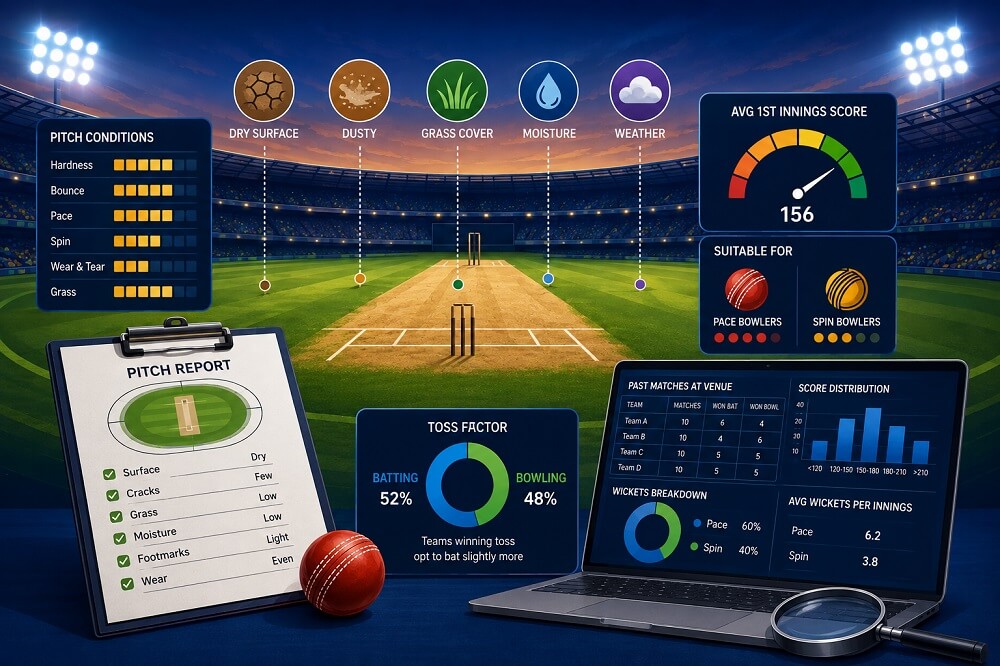
The toss is one of the first major moments before a cricket match begins. While it lasts only a few seconds, the decision to bat or bowl first can influence team strategy throughout the game.
The toss should never be viewed in isolation. Captains usually consider the pitch, weather, venue history, team strengths, and match format before making a decision.
What Is the Cricket Toss?
Before the match starts, the two captains meet with the match referee.
One captain flips a coin, while the other calls heads or tails.
The winner chooses to:
- Bat first
- Bowl first
The losing captain follows the remaining option.
Why the Toss Matters
The toss may influence:
- Batting conditions
- Bowling conditions
- Pitch behaviour
- Dew factor
- Team strategy
- Match tempo
Its importance varies depending on the venue and format, making platforms like gold 365 cricket a useful resource for fans following different conditions and match formats.
Bat First or Bowl First?
There is no universal answer.
Teams may choose to bat first when:
- The pitch is expected to deteriorate.
- A high first-innings score creates scoreboard pressure.
- Conditions are expected to become harder for batting later.
- Teams may choose to bowl first when:
- Early moisture may help fast bowlers.
- Heavy evening dew is expected.
- Chasing has historically been successful at the venue.
Pitch Conditions and Toss Decisions
Captains study the pitch before making their choice.
Green Pitch
- Often offers seam movement early.
- Teams may consider bowling first.
Flat Pitch
- Generally provides consistent bounce.
- Batting first can help build a large total.
Dry Pitch
- May assist spin bowlers later.
- Teams often consider batting first.
Worn Pitch
- Can become more difficult for batting as the match progresses.
- The pitch report is one factor among many and does not guarantee how the match will unfold.
Weather and Dew Factor
Weather can influence the toss decision.
Rain Forecast
Teams may adjust their strategy if interruptions are expected.
Dew
In evening matches, dew can make the ball slippery and affect bowlers’ grip.
Cloud Cover
Overcast conditions may encourage captains to bowl first if they expect assistance for seam bowlers.
Venue Records
Historical venue statistics provide useful context.
Review:
- Average first-innings score
- Average second-innings score
- Chasing success rate
- Pace vs spin effectiveness
- Boundary dimensions
Venue history helps explain trends but should not replace current match analysis.
Match Format Differences
Test Cricket
Captains often think about how the pitch may change over five days.
ODI Cricket
Teams balance first-innings scoring potential with chasing conditions.
T20 Cricket
Dew, powerplay strategy, and chasing trends often receive greater attention.
Captaincy and Team Strategy
The toss decision also depends on the team’s strengths.
Captains consider:
- Batting depth
- Bowling attack
- All-rounders
- Fielding quality
- Opposition strengths
Two captains may make different decisions on the same pitch based on their squads.
Common Toss Myths
Winning the Toss Guarantees Victory
False.
Many teams lose despite winning the toss.
Every Team Should Bowl First in T20 Cricket
Not always.
Conditions vary between venues and matches.
The Toss Is the Most Important Factor
The toss is important, but team performance, execution, and match conditions often have a greater impact.
Responsible Betting Reminder
If you use toss information as part of your research:
- Treat it as one piece of the overall analysis.
- Combine it with team form, pitch reports, weather, venue history, and player availability.
- Never assume the toss guarantees the result.
- Bet only where it is legal and only if you meet the required age requirements.
- Set limits and avoid chasing losses.
Key Takeaways
- The toss helps determine whether a team bats or bowls first.
- Pitch conditions, weather, dew, venue history, and team strengths all influence the decision.
- Different formats require different toss strategies.
- Winning the toss does not guarantee winning the match.
- Use toss analysis together with broader cricket research.
Frequently Asked Questions
What is the cricket toss?
The toss is a coin flip before the match that determines which captain chooses to bat or bowl first.
Why is the toss important?
It allows captains to select a strategy based on pitch conditions, weather, and team strengths.
Does winning the toss guarantee a win?
No. The toss may influence strategy, but it does not determine the outcome.
Why do teams bowl first in some T20 matches?
They may expect dew later in the evening or believe the conditions favour chasing.
Should toss analysis be used alone?
No. It should always be combined with pitch reports, weather forecasts, team form, venue history, and player availability.
